The most beautiful villas of Menton
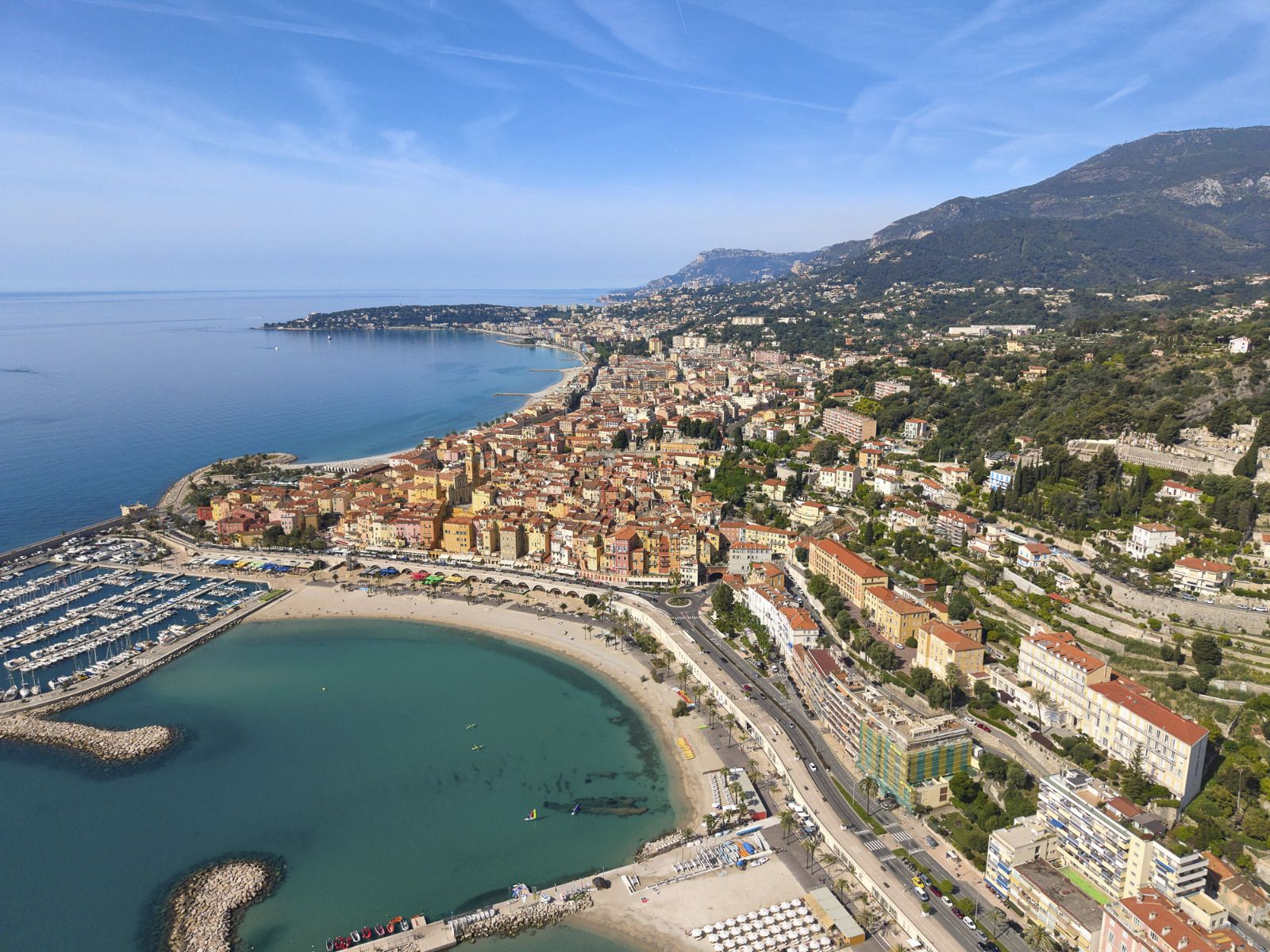
Menton is the last French town before the Italian border. But it is also an incredible city bathed in light and sunshine. Here, visitors and residents alike let themselves be pleasantly lulled by the sea and the Gulf of Genoa. Boasting exceptional sunshine, centuries of history, and an ideal location, Menton is a city that attracts more and more visitors, as well as new residents every year. As for the most beautiful villas in Menton, most of them are found on Boulevard de Garavan and in the hills above the town. And if this town has attracted so many people for years, it is simply thanks to its climate and its strategic location between the Alps, Monaco, and Italy. In fact, it is said that Menton benefits from a micro-climate, which is why it is sometimes nicknamed "Little Africa." It must be said that in Menton the gardens are lush, giving the impression of a tropical location.
The Serene Villa Maria Serena
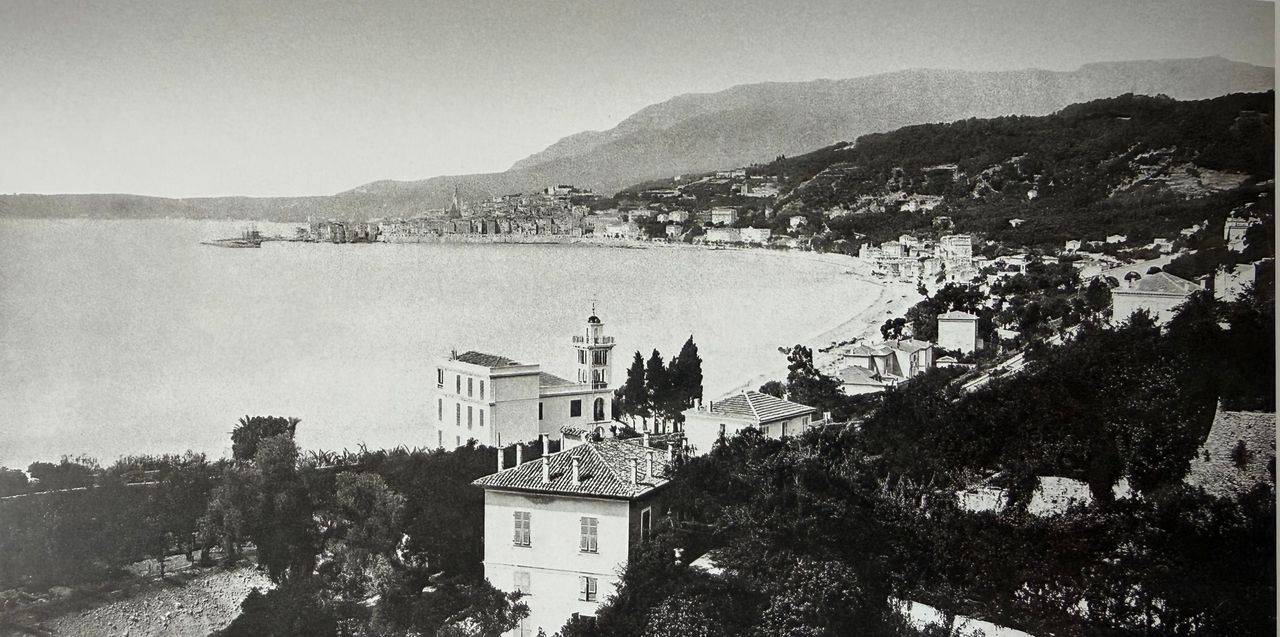
This immense Belle Époque-style residence stands out in the urban landscape. Indeed, it is thanks to its famous and illustrious architect that we owe the Paris Opera. Charles Garnier was a great 19th-century architect responsible for one of the most beautiful monuments in Paris. However, it is possible that the famous Charles Garnier called upon a local architect, a certain Pierre Jansoulin.
This seaside palace was built along the Promenade de la Reine Astrid at the end of the 19th century for a French aristocrat and diplomat. Count Alexandre Foucher de Careil acquired the land around 1882, and construction of the Villa Serena continued for more than four years, until 1886. A little later, the enjoyment of Villa Maria Serena passed to a wealthy banker. Having purchased it in 1922, Hans Henry Konig lived here until his death, and in his final wishes decided to donate the upper part to his head gardener and bequeathed the villa to the town of Menton. Upon his death in 1947, Villa Serena thus became the property of the town of Menton, and the British businessman became, in a sense, the last owner of Villa Maria Serena. Today this luxurious residence serves as a reception hall for major events and the welcoming of prestigious guests. Note that guided tours of the villa are normally scheduled on Tuesdays and Thursdays.
Villa Serena, located at the foot of a cliff overlooking the Mediterranean Sea, is the most "Italian" of Menton's villas. Its lovely wooded park is also very much like a botanical garden. It contains a multitude of plants of every kind: Cycas revoluta, palm trees, Dracaena, Bauhinia, and Strelitzia alba. Exotic plants and trees that seem to tell us Menton is Europe's own "Little South Africa."
Address of Villa Serena: 21 Promenade Reine Astrid, Menton
The Colombières Estate
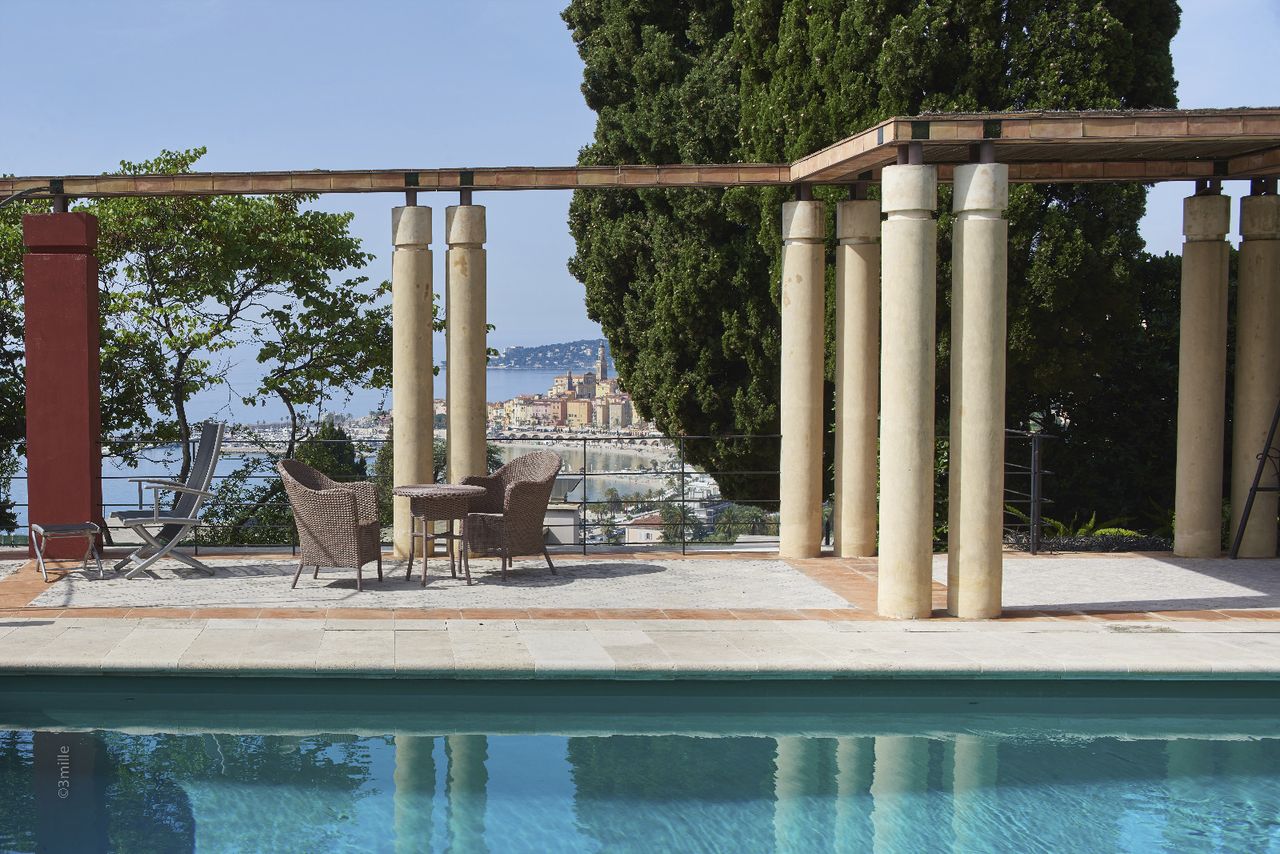
Situated on a hill in Menton, the Colombières estate overlooks the Bay of Garavan. This residence can be visited and is even listed as a historic monument.
The Colombières estate is one of the most beautiful villas in Menton. Its garden is the work of a certain Ferdinand Bac. As a reminder, Ferdinand Bac was the grandson of the King of Westphalia. This artist and landscape designer was the driving force behind a wooded park laden with numerous symbols. It took seven long years for this exceptional landscape designer to achieve the unthinkable: creating an odyssey through a garden meant to evoke a timeless journey around the Mediterranean. So many metaphorical creations that invite an imaginary voyage around the Mediterranean Sea. The olive trees recall the vegetation of the Mediterranean basin, while the numerous sculptures reference the glorious and flamboyant past of Greek and Roman civilizations. Cypress trees and a carob tree mark out the space and lend the plant-based accents typical of botanical gardens. Originally, the park of Villa des Colombières covered seven hectares. But as is often the case on the French Riviera, pressure on available real estate took its toll on part of the gardens: 3.5 hectares were sold off in lots to allow the construction of villas.
As for its architecture, the Villa des Colombières, completed during the Roaring Twenties, overlooks a veritable Garden of Eden. This is precisely why it was designed as a true work of art, so as to hold its own alongside the gardens. The very first owners of this luxurious residence asked Ferdinand Bac to carry his creative vision into every corner of their villa. Émile and Caroline Ladan-Bockairy thus entrusted the entire design of the parks and gardens to a single man, achieving a breathtaking result still spoken of nearly a century later. This Art Deco building, with Greek and Spanish influences, remains a must-see for anyone wishing to discover behind the scenes of the French Riviera's most beautiful villas.
While the gardens can be visited, the villa itself is private and not open to the public. Today, Villa des Colombières belongs to the former CEO of Habitat France, co-founder of the famous furniture and home design retail chain — a company that has since gone bankrupt. He fondly recalls the time when he renovated and redesigned the property with his late wife, Margaret, between 1995 and 2000. Located in the highly sought-after Super Garavan district, the villa enjoys a breathtaking view over the sea, the gardens, and the town. Today The Colombières Estate is proposed for sale by our agency.
The Carnolès Palace
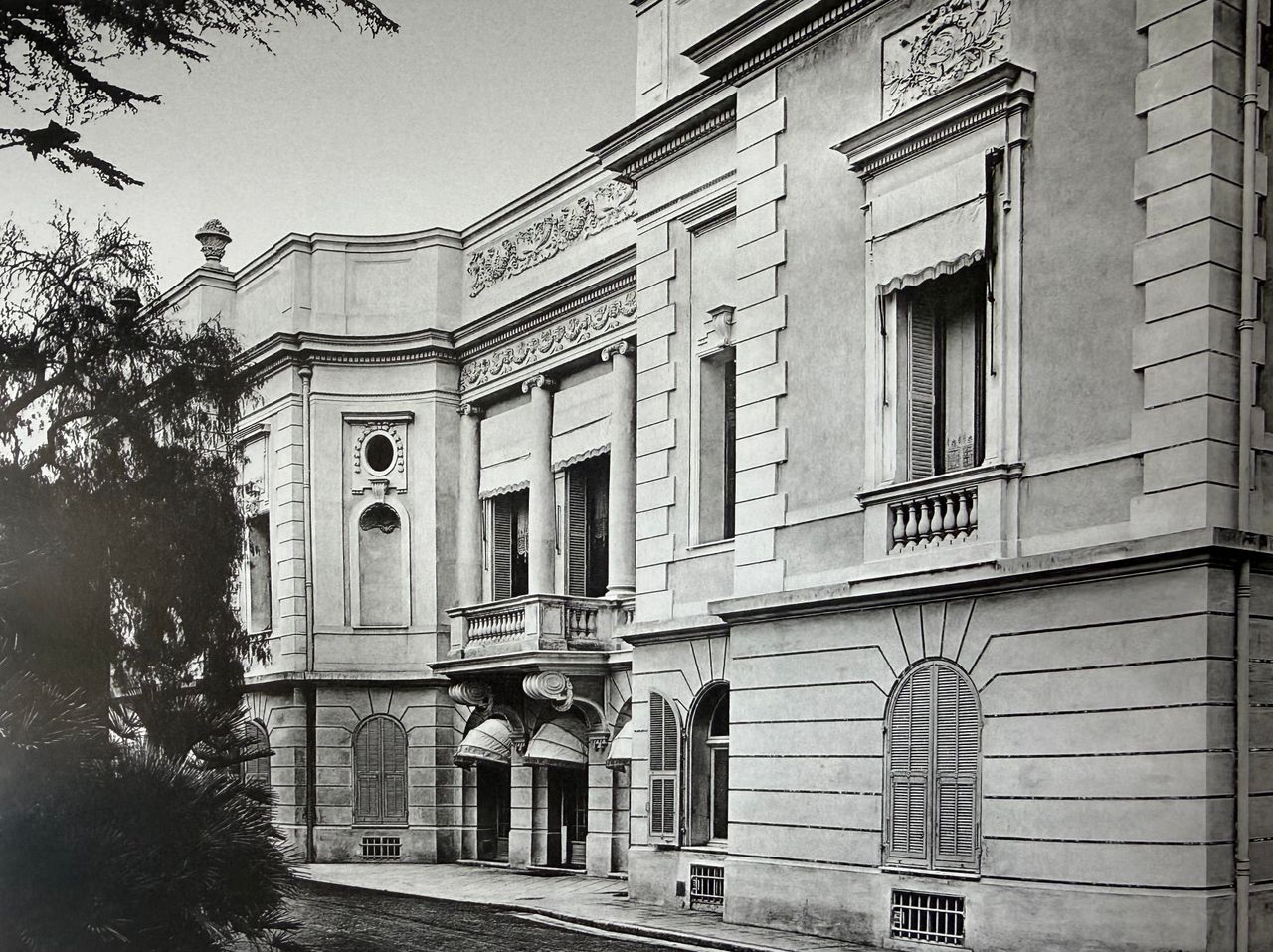
This grand residence is the summer palace of the princes and princesses of Monaco. A little-known place that reminds us that the beautiful town of Menton is an integral part of the French Riviera, as the English like to call our beautiful Côte d'Azur.
As with the Colombières estate, the gardens can be visited, and one can even discover the national citrus fruit collection there. Once again, this Menton villa allows for a leap into French history. Originally, this large plot of land belonged to the monks of Lérins. But in 1717, Antoine I Grimaldi, Prince of Monaco, purchased it, making the brotherhood an offer they could not refuse. He became the owner of a superb piece of land on which he decided to build a small Versailles. Indeed, the Monegasque prince had been captivated by the beauty and grandeur of the Palace of Versailles. To achieve this, he called upon the very same architects who had worked for Louis XIV. Messrs. Cotte and Jacques V Gabriel thus brought forth what would be called the "Casin de Carnolès." What is now called a "villa" is in fact more of a palace. Its vast park was adorned with outbuildings, fountains, and water features, just like Versailles. Behind the scenes, a Monegasque architect was also at work: Jean Antoine Latour devoted part of his time to adapting and completing the palace. Later, it was Honoré V of Monaco's turn to order a restoration in the Empire style. Why? Because between 1793 and 1818 this magnificent property had been confiscated by France and its revolutionary leaders.
Over time, the Principality gradually turned away from the Casin de Carnolès. At the very end of the 19th century, the building changed hands several times. For a while it even served as a casino. Finally, it was a great American patron, Edward Phelps Allis, who became master of the estate. On this occasion, the grand mansion was entirely redesigned by a Danish architect, a certain Hans-Georg Tersling, who directed the works throughout the year 1896.
This historic monument ceased to be a place of residence in 1961, when the municipality bought it to turn it into the Menton Museum of Fine Arts. The Carnolès Palace thus definitively entered public history and heritage, to the great delight of art lovers. Indeed, this museum displays paintings ranging from the 13th century to the present day. It should be noted that major conservation and renovation works were undertaken in 2025 and 2026 to safeguard the palace.
Address of the Carnolès Palace: 3 Avenue de la Madone, Menton
Villa Fontana Rosa
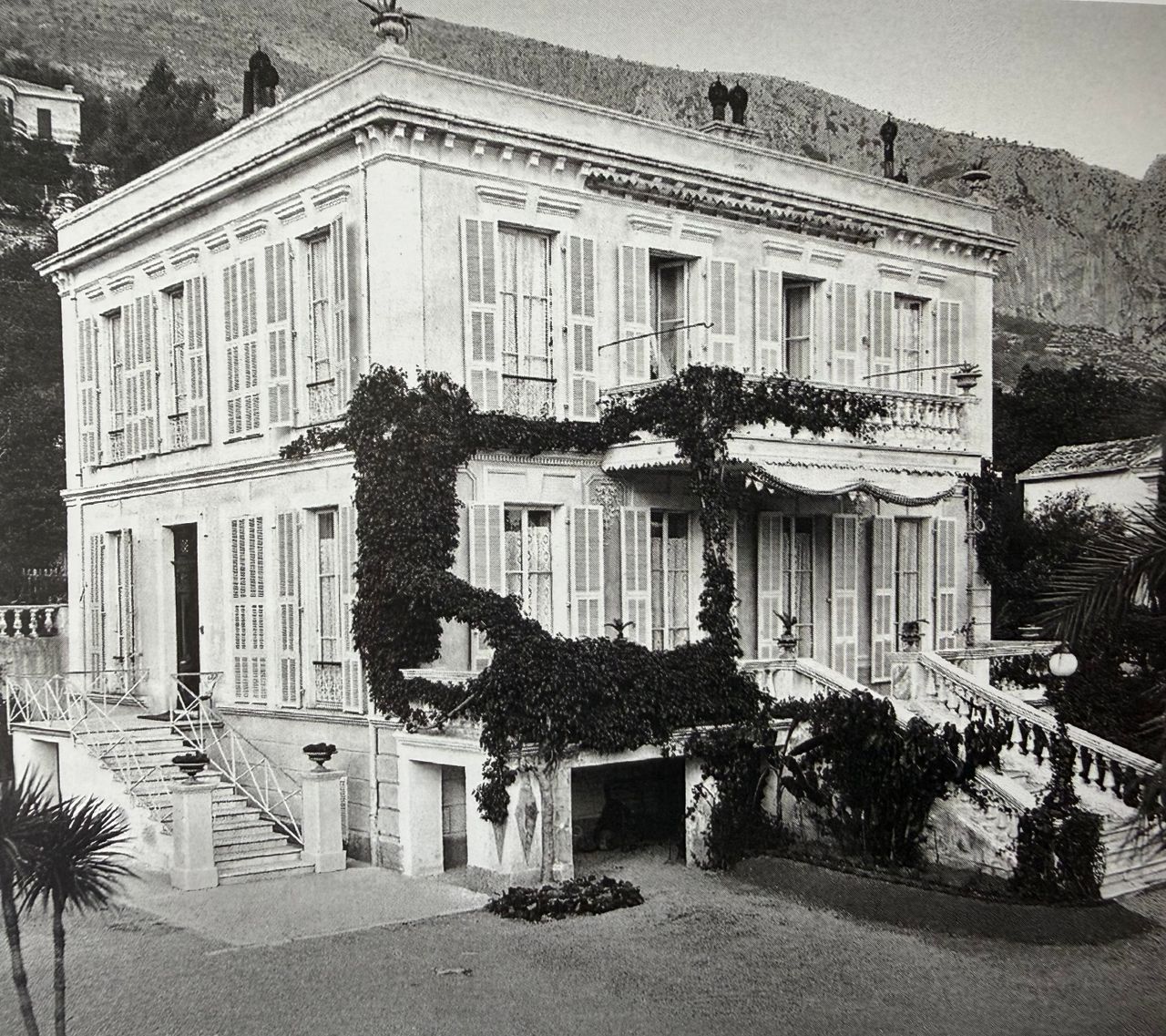
Another villa, and again exteriors and a bucolic, paradise-like garden. Villa Fontana Rosa is also recognized in the field of architecture as an exceptional place. Its park, which today is a public garden of the town of Menton, is nicknamed "the novelists' garden."
The history of this residence begins at the start of the 20th century, when an Iberian writer from Valencia, Vicente Blasco Ibáñez, acquired what was then a house on a very beautiful plot of land. Historically, this was the site of the Villa Émile, a 19th-century house that was remodeled during the 20th century. Over time, parts of the land were sold off in 1974 to build new residences, and the main building of Villa Fontana Rosa was demolished in 1985. Of this once-great villa, only a few structures and a splendid garden remain. Discovering the architecture of the Côte d'Azur also means immersing oneself in the history of its owners — bearing unwitting witness to extraordinary successes, industrial shipwrecks, and bankruptcies. The most notable owner of Villa Fontana Rosa is, of course, Blasco Ibáñez, who even lent his name to the street where he lived. Largely forgotten by the general public today, time has passed, and neither the news nor social media pay much attention to this early-20th-century screenwriter, politician, journalist, and novelist. A wealthy owner who lived in Menton for only six short years before being struck down by bronchopneumonia and diabetes in his haven of peace. Such is the lesson in humility taught to us by the most beautiful villas of Menton: wealth and health are fleeting states, and even the wealthiest owners never escape their human condition.
Address of Villa Fontana Rosa: 6 Avenue Blasco Ibáñez, Menton


